Source Dual Speed Pto Tractor Shaft for Tillage Planting Harvesting
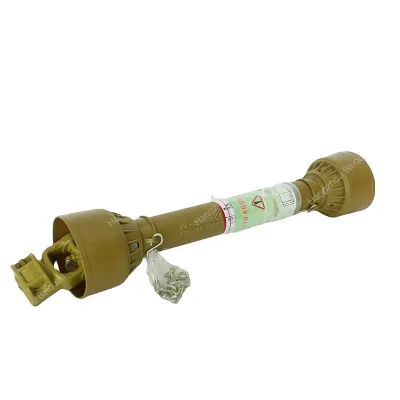
Compare 30 dual speed pto tractor shaft options from verified Chinese manufacturers. These units support tillage, planting, fertilization, and harvesting with customizable lengths and universal joints.
Key considerations
Products List




Comprehensive Sourcing Guide
Strategic Sourcing Guide for Dual Speed PTO Tractor Shafts
Navigating the global market for dual speed PTO tractor shafts requires a disciplined approach that balances technical precision with supply chain reliability. These components are critical for agricultural machinery, serving as the primary link between the power source and the implement. Buyers must understand that while the core function remains consistent, the specifications for drive shafts vary significantly based on the tractor model, the implement type, and the operational environment. This guide synthesizes observed market data and technical requirements to provide a framework for evaluating potential suppliers and securing high-performance drive shafts without relying on unverified claims.
Technical Specifications and Dimensional Precision
The foundation of a successful procurement strategy lies in verifying the exact technical specifications of the drive shaft. The market data indicates a diverse range of dimensions and configurations, necessitating rigorous verification before placing an order. A primary observation is the variation in length, with documented specifications ranging from 394mm to 900mm, and further instances of "OEM" lengths. This variance underscores the necessity for buyers to confirm the exact required length for their specific machinery, as a mismatch can lead to catastrophic failure or operational inefficiency.
Beyond length, the internal geometry is equally critical. The universal joint dimensions are a key differentiator in the market. Specific observations include joint sizes of 27x74.6mm and 27x81.8mm. These measurements dictate the torque capacity and the compatibility with the yoke of the tractor and the implement. Similarly, the spline specifications must be matched precisely. Data points highlight a common configuration of 1 3/8" Z6 spline, which is a standard for many agricultural applications, though other variations exist.
The material composition is another non-negotiable factor. The supply chain consistently identifies Carbon Steel as the primary material for these shafts. This material choice is essential for withstanding the high torsional loads typical in tillage and harvesting operations. Furthermore, the manufacturing process plays a vital role in the final product's integrity. "Hot Forging" is a noted production technique, which generally implies superior grain structure and strength compared to cold forming. Buyers should verify that the supplier utilizes this process to ensure the shaft can handle the dynamic stresses of dual-speed operations.
Compliance, Certification, and Quality Standards
In the B2B agricultural sector, compliance is not merely a formality but a prerequisite for market access and operational safety. The observed product data reveals a mix of certification levels. Some listings cite CE certification, which is a fundamental requirement for selling machinery within the European Economic Area. However, more comprehensive quality assurance is often indicated by certifications such as ISO9001, ISO13485, and TS16949. The presence of these standards suggests a supplier with a mature quality management system capable of maintaining consistency across large production runs.
Dimensional accuracy is a critical metric that directly correlates with these certifications. High-quality suppliers adhere to tight tolerances, with observed data specifying Journal Diameter Dimensional Accuracy in the range of IT6-IT7. This level of precision ensures that the shaft fits perfectly within the housing, minimizing vibration and wear. Additionally, surface roughness is a key indicator of manufacturing quality, with observed standards ranging from 0.63 to 0.16μm. A smoother surface finish reduces friction and heat generation, extending the lifespan of the universal joints and bearings.
Surface hardness is another vital attribute for durability. The market data points to a hardness range of 58-64HRC for the hardened steel components. This range is typical for high-stress agricultural applications, providing a balance between toughness and wear resistance. Buyers must request test reports or certificates of analysis to verify that the supplied shafts meet these hardness specifications, as this directly impacts the component's ability to resist deformation under load.
Cost Drivers and Pricing Structures
Understanding the cost drivers for dual speed PTO shafts is essential for budgeting and negotiating effective contracts. The observed price range in the market is extensive, spanning from $2 to $999 USD. This wide disparity is not indicative of quality alone but reflects differences in material grades, manufacturing complexity, customization levels, and order volumes. A shaft priced at the lower end of the spectrum may be a standard, off-the-shelf component with minimal customization, while a unit at the higher end likely involves specialized engineering, premium materials, or complex dual-speed mechanisms.
The Minimum Order Quantity (MOQ) is another significant factor influencing the unit cost. The observed MOQ range is from 1 to 200 units. Suppliers with lower MOQs may charge a premium per unit to cover setup costs, whereas bulk orders often benefit from economies of scale. Buyers should evaluate their inventory needs against these thresholds to optimize costs. Additionally, the packaging method can impact the final price. Options range from neutral packing to customized packaging, and some suppliers offer polybag and carton combinations. Customization of the packing, particularly for branding or specific shipping requirements, often incurs additional charges.
Payment terms also play a role in the overall financial arrangement. The market data indicates a common requirement of 50% payment via PayPal or T/T (Telegraphic Transfer) upfront. This standard practice mitigates risk for the supplier but requires buyers to manage their cash flow accordingly. It is crucial to negotiate clear terms regarding the balance payment, which is typically due upon shipment or before delivery, to ensure a smooth transaction process.
Typical Applications and Operational Context
The versatility of the dual speed PTO tractor shaft is evident in its wide range of applications. The observed usage data categorizes these shafts for Tillage, Planting, Fertilization, and Harvester operations. In tillage applications, the shaft must withstand high torque and shock loads generated by heavy soil engagement. For planting and fertilization, the focus shifts to consistent rotational speed and reliability to ensure uniform seed or fertilizer distribution.
The specific design of the shaft often aligns with the operational demands. For instance, the "Stiffness / Rigid Axle" characteristic is noted for applications requiring precise power transmission without excessive flex. Conversely, the "Axis Shape" is typically a straight shaft, which is standard for most tractor-to-implement connections. The appearance shape is consistently round, facilitating the use of standard protective guards and safety covers.
Furthermore, the yoke and tube configurations are tailored to specific implement needs. The market offers a choice of Triangular, Star, or Lemon yokes and tubes. This variety allows buyers to match the shaft to the specific interface of their machinery. The inclusion of "Cross Kits" with three types to choose from further highlights the modular nature of these components, allowing for easy maintenance and replacement. Understanding these application-specific details ensures that the selected shaft will perform reliably in the intended field conditions.
Supplier Evaluation and Selection Criteria
Selecting the right supplier requires a multi-faceted evaluation process that goes beyond price comparisons. One of the primary indicators of a reliable supplier is the origin of the product. The observed data consistently points to China as the origin for these components. While this is a major manufacturing hub, buyers must verify the specific capabilities of the factory. The presence of a diverse product portfolio, including models like T4-900-05B-RA1 and HZUD21-0018A, suggests a supplier with broad manufacturing capabilities.
Customer references are another valuable metric. Some suppliers list major industry names such as Haas, HP, and Parker as their customers. While this does not guarantee a specific relationship, it indicates a level of market acceptance and the ability to meet the standards of established brands. Buyers should request proof of these relationships or references to validate the supplier's track record.
The delivery time is a critical logistical factor. The observed lead times range from 7 to 70 days, with some specific instances noting 15-70 days. This variance can be influenced by the complexity of the order, the current production schedule, and the shipping method. Buyers must align their procurement timeline with these lead times to avoid production delays. It is advisable to confirm the exact delivery window for the specific order size and customization requirements before finalizing the contract.
Quality Control and Long-Term Procurement Considerations
Quality control should be an integral part of the procurement process, not an afterthought. The observed specifications for tolerances, such as +/-0.05mm, highlight the precision required for these components. Buyers should insist on a quality control plan that includes inspection at various stages of production, from raw material verification to final assembly. The use of "Neutral Packing" or "Customization" options also allows for flexibility in how the product is presented, but the internal quality must remain consistent.
Long-term procurement considerations involve the availability of spare parts and the supplier's ability to support the product lifecycle. The data mentions "Cross Kits" and various yoke types, indicating that the supplier offers a range of compatible parts. This is crucial for maintenance and repair, ensuring that downtime is minimized when components wear out. Additionally, the "Customization: Available" attribute suggests that suppliers are willing to adapt products to specific needs, which is a significant advantage for buyers with unique machinery requirements.
Finally, the environmental and logistical aspects of shipping should be considered. The observed packing method includes "Ocean Shipping," which is standard for international trade. Buyers should ensure that the packaging is robust enough to withstand long-distance transit without damaging the shaft or its protective coatings. The combination of high-quality materials, precise manufacturing, and reliable logistics ensures that the dual speed PTO tractor shaft will perform effectively throughout its intended service life.
Summary of Key Technical and Commercial Parameters
To facilitate a quick reference during the sourcing process, the following table summarizes the critical parameters observed in the market data. This comparison aids in verifying supplier claims against standard market expectations.
| Parameter | Observed Range / Specific Value | Verification Requirement |
|---|---|---|
| Material | Carbon Steel | Request Mill Test Certificates |
| Length | 394mm, 900mm, OEM | Confirm exact dimension for application |
| Universal Joint | 27x74.6mm, 27x81.8mm | Match to tractor/implement interface |
| Spline | 1 3/8" Z6 | Verify tooth count and pitch |
| Surface Hardness | 58-64HRC | Request Rockwell Hardness Test Report |
| Dimensional Accuracy | IT6-IT7 | Inspect with calibrated gauges |
| Surface Roughness | 0.63-0.16μm | Verify with surface profilometer |
| Certifications | CE, ISO9001, ISO13485, TS16949 | Request valid certificates |
| Lead Time | 7-70 Days | Confirm specific schedule in PO |
| MOQ | 1-200 Units | Negotiate based on volume needs |
| Origin | China | Verify factory location and audit |
By adhering to these guidelines and rigorously verifying the provided data points, buyers can secure high-quality dual speed PTO tractor shafts that meet the demanding requirements of modern agricultural operations. The focus on technical precision, certified quality, and reliable supplier relationships forms the backbone of a successful procurement strategy in this sector.
FAQs
What certifications do dual speed pto tractor shafts typically have?
Products often carry CE certification for European market access. Some manufacturers also provide ISO9001, ISO13485, and TS16949 standards to ensure consistent quality management systems and operational safety for agricultural machinery.
How long is the delivery time for these tractor shafts?
Delivery times generally range from 7 to 70 days depending on order specifics. Some standard items may ship within 15 to 70 days, while others can be delivered in as little as 7 days based on current production schedules.
Which material is used for the hardened steel tractor drive shafts?
Carbon steel is the primary material used for these drive shafts to withstand high torsional loads. The components often feature surface hardness between 58 and 64HRC to ensure durability during tillage and harvesting operations.
Can I find shafts with specific universal joint dimensions?
Yes, specific universal joint dimensions like 27x74.6mm and 27x81.8mm are available in the market. These measurements dictate torque capacity and compatibility with the yoke of the tractor and the attached implement for precise power transmission.
What is the minimum order quantity for these agricultural parts?
The minimum order quantity ranges from 1 to 200 units depending on the supplier. Lower MOQs may incur higher per-unit costs, while bulk orders often benefit from economies of scale and more favorable pricing structures.
How is the product packed for international shipping?
Packaging options include neutral packing, polybag plus carton, or ocean shipping containers. Customization is available for branding or specific shipping requirements, though standard neutral packing is commonly used for general distribution.